
If you would like view the project from start to finish in order, start here and continue by clicking the “Next Page” links at the bottom of the page.
You can also watch the progress of the RV10 build by clicking on a category on the right. The numbers after the categories are the number of hours I’ve worked on that section. For a full total of hours worked to date, see the “Build Stats” bottom of every page.
Time lapse video of the build up to date
I started flight training in the fall of 2010. I’m sure anyone who’s been through flight training can tell you that once you start flying, you start day dreaming about which plane you would want to own someday.
In choosing a plane, you have to first define your mission. My mission was to take 4 people (or two people, a big dog, and a ton of luggage) on a long cross country trip, flying as fast as possible, as cheaply as possible.
I started off looking at Cessna 172’s, which are basically the Ford Taurus of the skies, but even though they have 4 seats, they don’t have the lifting capacity (useful load) to take 4 adults and still be able to take fuel. They are also slow, cruising at about 110 knots while burning 9-10 gallons per hour..
The 172’s big brother is the 182. It’s a larger version of the 172 which can actually take 4 adults and enough fuel to fly for a few hours. My buddy Praba has a beautiful 182 with a Garmin G1000 glass cockpit. It’s also faster, cruising at 140-145 knots, but it’s burning more fuel at 14-15 GPH.


Praba and his 2007 Cessna 182T
I also looked into Mooneys, which are fast, fuel efficient airplanes. Depending on the model, these planes will cruise between 150-160 knots, but only burn 10-11 GPH. Sounds great, but there are a few catches. First, they have retractable landing gear, which is more expensive to maintain, and not ideal for landing on anything other than paved runways. And second, they are overall a little more expensive to maintain.
Somewhere in my searching, I noticed that there were people out there building their own airplanes. Hey, now that sounds like fun! I wonder if there are any 4 place kit planes? Turns out there are a few. There is a composite plane called a Velocity, and an aluminum plane called a Van’s RV-10.
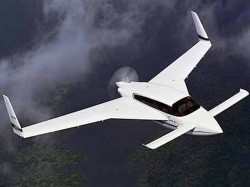
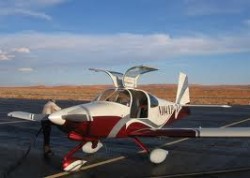
Velocity and RV10
These are both beautiful planes that fit 4 real people, a FAST, and very fuel efficient. The Velocity will cruise over 200 knots, and the RV10 160-170 knots, both burning close to 10 GPH. This is better fuel economy than my truck, all while traveling at 200MPH!
I ended up choosing the RV10 over the velocity for a number of reasons:
- Pusher vs Tractor. I want to use grass strips, and don’t want to kick stuff into the prop with the wheels.
- Composite vs Aluminum. I’m just personally more comfortable working with metal than fiberglass.
- Short field performance. The strip near my house that I want to be at some day is 2000′. And grass (see point 1).
- Window size. I fly with passengers that are slightly claustrophobic. Putting them in a 4 person plane is already tough. I want as much window area as I can get.
- The Community. You can’t beat the support of THOUSANDS of builders in forums like VansAirforce.com and the Matronics email lists. There are also many build logs that go step by step through the build process, like Tim Olson’s site MyRV10.com.
So after a lot of research, a little soul searching, a whole lot of me talking Colleens ear off, I ended up deciding to build an RV10! In the end, I will have an aircraft that can fly 200 MPH, carry 4 adults with full fuel and a little baggage, get better fuel economy than an SUV, and have more capability in the panel than most certified planes. As an added bonus, the FAA sees the builder of a homebuilt as the “manufacturer” so I can do all maintenance on the plane myself which not only saves money, but allows me to know the plane fully.
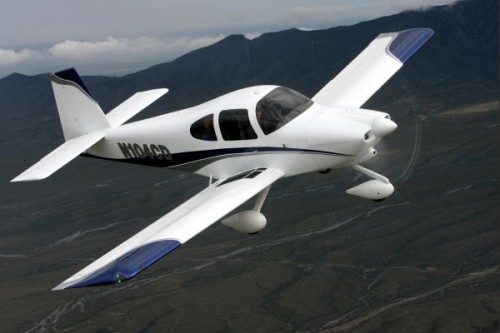
Tim Olson’s RV10